Community and Culture
League News and the Season Rhythm
See the notices that mark an adult softball season: sign-up dates, first-week bat checks, work parties, tournament calls and end-of-season finals.
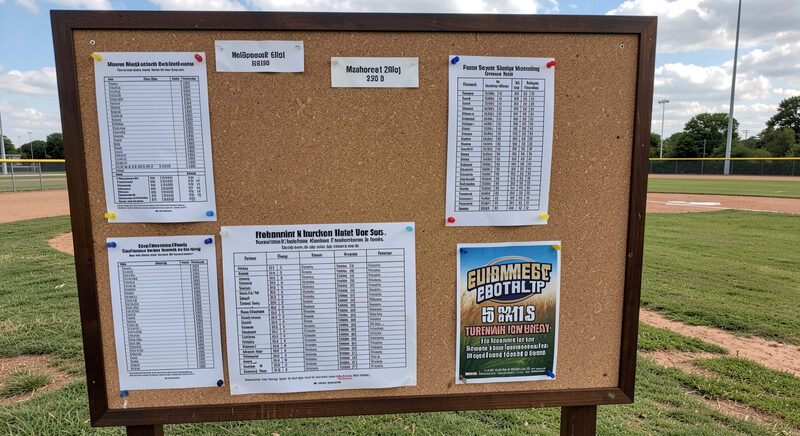
Every adult softball season has a soundtrack, and it is made of notices. The sign-up reminder that lands in January. The first-week bat check. The work party on a Saturday morning. The tournament announcement that appears halfway through the season. The finals date that everyone circles. Read together, these notices tell the story of a season before a single pitch is thrown.
A player who ignores the notices misses more than information. They miss the chance to sign up before a division fills, the warning about a bat that will not pass inspection, and the invitation to the events that make a league feel like a community. The notices are the league talking to its players, and listening is part of being on a team.
What Comes Before the Season Starts
The first notices of the year are about money and commitment. A league announces the dates when teams may register, the fee for the season, and the deadline to enter. It may also announce the nights and divisions available, so a captain knows what to sign up for. This is the window when a team is built, and it closes fast in popular leagues.
Players who want a specific night or division should register early. A league that fills its co-ed division may still have room in the men's division, and a player who waits may end up with a choice between a night that does not fit and no team at all. The guide on joining a team as a free agent explains how a player without a roster can still get on the field during this window.
What Happens in the First Week
The first week of the season brings a cluster of practical notices. Bat checks top the list in most leagues, because only inspected and stickered bats may be used. Players are asked to arrive early so the bats can be checked before the game. A league may also remind players of the field rules: no alcohol, no glass, no dogs, no metal cleats, and no practicing on the field outside scheduled times.
These notices are not busywork. A bat check keeps unsafe equipment off the field, and the field rules protect the league's agreement with the owner of the fields. A player who reads them arrives prepared, and a team that reads them avoids an embarrassing delay in the first inning. The guide on softball bat rules and standards explains the bat check in detail.
What Notices Appear Mid-Season
Mid-season notices are about maintenance and community. A work party invites players to help repair the fields, and often offers a discount on team fees in return. A tournament announcement invites teams to a weekend event, sometimes to raise money for a cause. A reminder about the alcohol policy may reappear after an incident. A note about the playoff format may arrive as the season nears its end.
This is the part of the season when a league's community is most visible. The work party is where players meet each other outside of games. The tournament is where the league gathers as a whole. A player who shows up to these events becomes part of the league in a way that playing alone never achieves. The guide on how softball tournaments work explains what those weekend events involve.
What Comes at the End of the Season
The final notices are about the finish. The league publishes the playoff bracket, the dates of the semifinals and finals, and the details of an awards night or a season-end gathering. It may also announce registration for the next season, which often opens before the current one ends. A player who wants to keep playing should watch for that notice and act on it.
The end of a season is also when a league takes stock. It may survey players about what worked and what did not. It may elect a new board. It may adjust the rules for next year based on what happened this year. A player who wants a say in the league should pay attention to these notices, because they are the mechanism through which a community league changes.
How Do You Keep Up Without Living Online
Not every player wants to check a website every day, and that is fine. The practical approach is to know the two or three channels a league uses, and to check them at the moments that matter: before the season, in the first week, and near the playoffs. A captain can carry the responsibility for the team, passing along anything that affects the roster.
Email and a league website are the most common channels, and many leagues also use a group message or a social media page. Whatever the channel, the rule is the same: read the notices that concern money, rules and dates, because those are the ones that cause problems when missed. The guide on how a community softball league is organised explains the people behind those notices and why they matter.
Where to Start
Start by finding your league's website or sign-up page and reading the current season's notices from top to bottom. Mark the deadlines and the dates that affect you. Then set a reminder for the first week and for the playoffs. A season goes more smoothly for the player who knows what is coming, and the notices are how a league tells you.