League Play
League Play
How adult softball leagues are organised: divisions, nights, seasons, sign-ups and fees, and the information pages every player learns to read.

Adult softball runs on a simple promise: a game on a weeknight, a team that keeps showing up, and a season that ends with someone holding a cheap trophy under the lights. Behind that promise sits a machine of divisions, fields, fees and volunteers that most players never see. This section explains how that machine works so a newcomer can join it without guessing, and so a captain can run a team without reinventing the wheel every spring.
Community leagues come in many shapes. Some are run by a city parks department, some by a nonprofit board, some by a single person with a spreadsheet and a lot of patience. The details differ, but the moving parts repeat from one town to the next: who plays, on which nights, for how long, at what cost, and under which rules. Learn the shape once and any league becomes readable.
What Are the Main Divisions in Adult Softball
Most adult programs split their teams by the kind of play and the people on the field. Co-ed leagues put men and women on the same roster and usually require a minimum number of women in the batting order. Men's leagues run their own division, and women's divisions exist in many towns, though they sometimes need enough interest to launch. Beyond gender, leagues divide by skill: a recreational or lower division for newer and casual teams, and an upper or competitive division for the squads that keep score in their heads.
The ball itself creates another split. Slow pitch is the default for adult recreation because the pitch arrives on a gentle arc and everyone can hit it. Fast pitch is faster and more demanding, closer to the college game, and shows up in fewer adult programs. A player who has never swung at a slow pitch should start there. The guide on how adult softball leagues work walks through that choice in plain language.
Which Night Will You Actually Play
Leagues spread their games across the week to share a limited number of fields. A typical town might run co-ed on Monday and Wednesday, a men's division on Thursday, and a second co-ed night on Friday. The night a team plays is often the single most important detail for a roster, because it decides who can commit. Two players who both love the game may simply never share a team if one works Tuesday evenings and the other coaches on Fridays.
When a league publishes its season, it usually names the nights first and the teams second. That order matters. A captain who recruits before checking the night may end up with a roster that cannot field nine players on game day. The season calendar, including sign-up windows and start dates, is the first thing to read, and the notes on how a season schedule is built show why those dates land where they do.
How Much Does an Adult League Cost
Most leagues charge by the team rather than by the player, and the fee covers a bundle of shared costs. Umpires take the largest share. Field preparation, lights, insurance, balls, bases and the league's own software fill the rest. A team fee might land anywhere from a few hundred to well over a thousand dollars for a season depending on the region, the number of games and whether the fields are lit.
Captains usually divide that fee across the roster, which turns a headline number into a per-player cost that is easier to accept. Some leagues also charge a small per-player registration or a fee for players added mid-season. Ask what the fee includes before paying, and ask what happens if the season is shortened by weather. A fair league states its refund or credit policy in writing, not at the end of a rained-out spring.
What Does a League Information Page Tell You
Every established league keeps a page or a packet of information that answers the same recurring questions. Where the fields are and how to reach them. Who sits on the board and who to contact. The rules that differ from the national rulebook. The policies on alcohol, pets, parking and practice times. The address for mail and the process for a protest. New players often skip this page and then wonder why their bat was checked or why a game ended early on a run rule.
Reading it takes ten minutes and saves a season of small surprises. The page on how a community softball league is organised explains what sits behind those notices and why a volunteer board writes them. Once a player understands that a league is a small organisation with real costs and real liability, the rules stop looking arbitrary.
How Do You Join Without a Team
Plenty of adults want to play but have no roster to join. Leagues handle this in a few standard ways. A free-agent list lets a solo player register and wait to be placed on a team that needs a body. A house team, sometimes called a league team, collects the unplaced players into a roster of their own. A captain looking for players may post a notice or ask the league to connect them with someone on the list.
The practical advice is the same in every case: register early, say honestly what position you play and what nights you are free, and show up to the first game ready to play anywhere. The guide on joining a team as a free agent covers the details, from what to write to an organiser to what to bring on night one.
Why Umpires and Rules Shape the Season
A league is only as smooth as its umpiring. Most adult games use one or two umpires, often working several games in a night for modest pay. Good leagues protect them with clear rules and a no-tolerance policy on abuse, because without umpires there is no season. Players who learn the local rule variations, from the strike zone to the mercy rule to the limit on home runs, spend less energy arguing and more energy playing.
The rules also protect the game itself. Bat checks keep unsafe equipment off the field. Time limits keep a weeknight from running past midnight. Run rules end a mismatch early so both teams can go home. None of it is designed to spoil the fun. It exists so that a group of adults with jobs the next morning can play a real game and still make it to work.
Where to Start
A new player can begin with three steps. Pick the kind of play that fits, slow pitch for almost everyone. Pick the night that fits the rest of life. Then read the league information and the local rules before the first pitch. From there, the rest is practice and showing up. The skills and drills section covers the swing and the field, and the gear and safety section covers what to bring and how to stay healthy through a long, hot season.
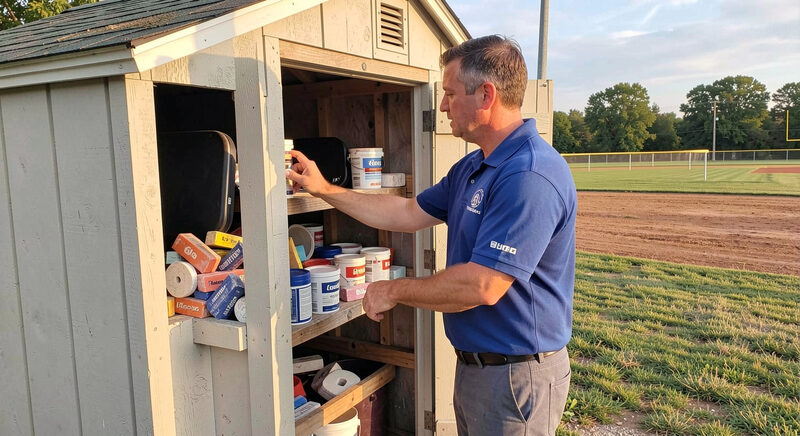
League Play
How a Community Softball League Is Organised
See what sits behind a community adult softball league: a volunteer board, playing fields, rules, insurance, umpires and the policies players live by.
A volunteer board, borrowed fields and the rules behind the notices.
League Play
How a Season Schedule Is Built
Follow how a league builds its season schedule around fields, nights, divisions and rainouts, and why some weeks look crowded and others open.
Fields, nights and weather decide the shape of a season.
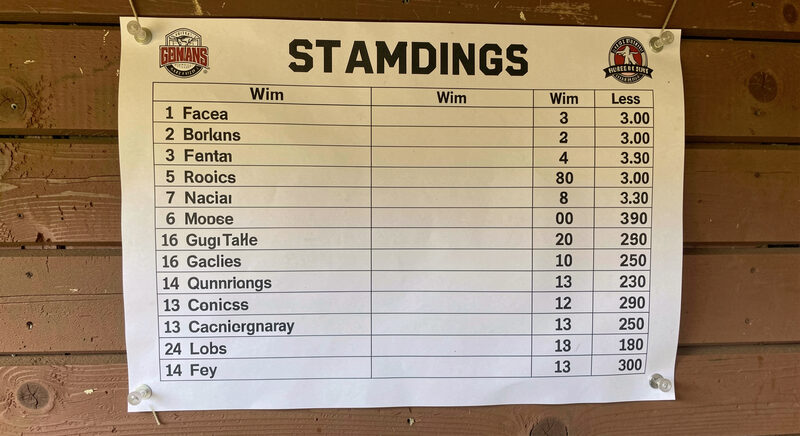
League Play
How to Read Softball Standings
Understand wins, losses, ties, run differential and head-to-head rules so a league table actually tells you where a team stands late in the season.
Wins, losses and the tiebreakers that decide the final week.

League Play
How Adult Softball Leagues Work
A plain walk through adult softball: co-ed and men's divisions, weeknight play, season length, team fees, umpires and how a newcomer fits in.
Co-ed and men's nights, season length, fees and umpires.
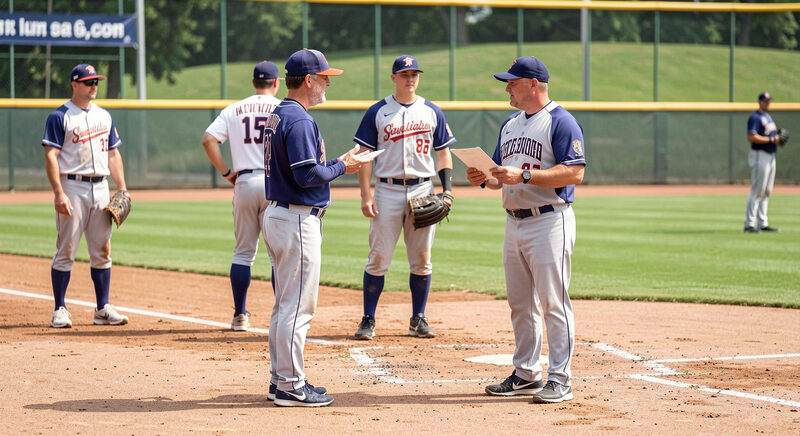
League Play
Joining a Team as a Free Agent
Join an adult softball league without a team: how free-agent lists work, what to tell an organiser, what to bring on night one and how to fit in fast.
How a solo player gets onto a team and stays there.