Skills and Drills
How to Hit a Softball
Build a repeatable softball swing: a balanced stance, a short stride, hip and hand timing, contact out front, and drills that fix a slow bat.
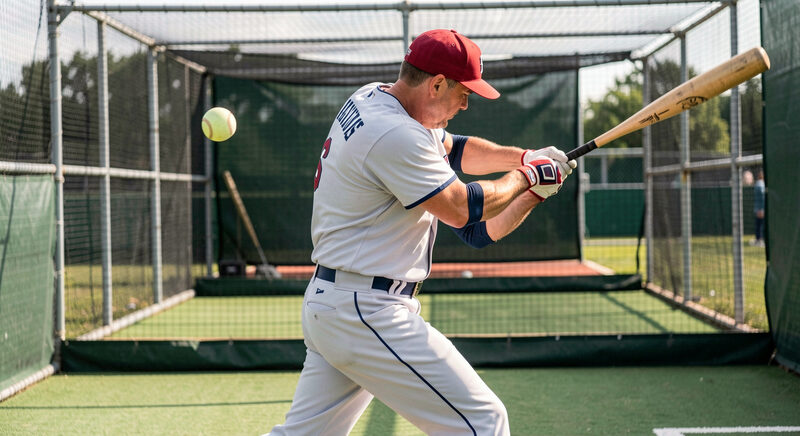
Hitting a softball is a skill anyone can learn, and most adults learn it the wrong way first. They step into the box, grip the bat tight, and try to hit the ball as hard as they can. The result is a long, slow swing that misses more often than it connects. The fix is not more effort. It is a shorter, repeatable swing built on a few simple pieces, practiced until it becomes automatic.
A good swing has four parts: a balanced stance, a short stride, hip and hand timing, and contact out in front of the plate. Get those right and the ball goes where it is pitched, which is the real goal in a recreational league where a base hit is worth more than a long out.
How Should You Stand in the Box
Start with a stance that feels athletic and balanced. Feet about shoulder width apart, knees slightly bent, weight centered between the feet. The back foot can be slightly open to help the hips turn. Hold the bat off the back shoulder with relaxed hands, not a death grip, because tension kills bat speed.
The stance should be the same every time, because a repeatable stance produces a repeatable swing. A player who shifts around from pitch to pitch gives the body a different problem to solve each time. Find a stance that feels comfortable and strong, then use it for every pitch. The guide on skills and drills puts the swing in the context of the rest of the game.
What Does the Stride Do
The stride is a small step toward the pitcher that starts the swing and loads the weight onto the back foot. It should be short, no more than a few inches, and it should happen early enough that the body is ready when the pitch arrives. A long stride drags the head forward and makes it hard to see the ball, and it makes the swing slower.
In slow pitch, the pitch hangs in the air long enough that a player can wait and see it. That is a gift. Use the time to read the arc and the depth of the pitch, then stride and swing. A player who rushes the stride in slow pitch swings at bad pitches and pops the ball up. Patience at the plate is one of the easiest advantages to gain.
How Do the Hips and Hands Work Together
The power in a swing comes from the hips, not the arms. The swing starts when the hips open toward the pitcher, and the hands follow through the hitting zone. A player who leads with the hands loses power and swings around the ball. A player who leads with the hips brings the bat through on a line.
The feel to look for is a chain: hips, then torso, then hands, then bat. Practice it slowly in a cage until the order becomes natural. A common drill is to swing at half speed with a focus on the hips firing first, then gradually add speed. The bat speed will follow the sequence, not the effort.
Where Should Contact Happen
Contact should happen out in front of the plate, not deep over it. A slow pitch is dropping as it reaches the batter, so meeting it out front gives the best chance of a line drive. A swing that waits too long meets the ball at the hands or behind the plate, producing weak contact and foul balls.
The simplest cue is to aim to hit the ball just before it reaches the front of the plate. In practice, set a target on the ground in front of the plate and try to drive the ball toward it. A player who consistently makes contact out front will hit the ball hard and on a line more often than one who swings late.
What Drills Actually Improve Hitting
A handful of drills will do more than an hour of aimless swinging. The tee drill builds the basic swing path without the pressure of a moving ball. Front toss, where a partner tosses underhand from close range, teaches timing and contact point. The two-ball drill, in which a player calls out which of two balls to hit, trains the eyes and the decision to swing.
Practice should be short and focused. Twenty swings with one cue in mind beats forty swings with none. A player who works on a single problem each session, such as staying back or keeping the hands inside the ball, will improve faster than one who simply swings until tired. The guide on how adult softball leagues work explains where hitting fits in the weekly rhythm of a season.
How Do You Handle a Slow Bat
A slow bat usually has three causes: a swing that is too long, hands that are too tense, or a bat that is too heavy. Shorten the swing by keeping the hands close to the body and cutting out the extra motion. Relax the grip so the bat can whip through the zone. And consider a lighter bat, because bat speed matters more than bat weight in slow pitch.
Before buying a new bat, check the league's bat rules, since not every bat is legal. The guide on softball bat rules and standards explains the stamps and sizes a league accepts. A lighter, legal bat with a short swing will beat a heavy bat every time.
Where to Start
Start with the stance and the stride, because they set up everything else. Then work on the hips leading the hands, and practice contact out front with front toss or a tee. Keep the sessions short and focused, one cue at a time. Hitting is a habit, and a player who builds the habit in a cage will see it show up in the box on game night.